Balancing Growth and Community Character
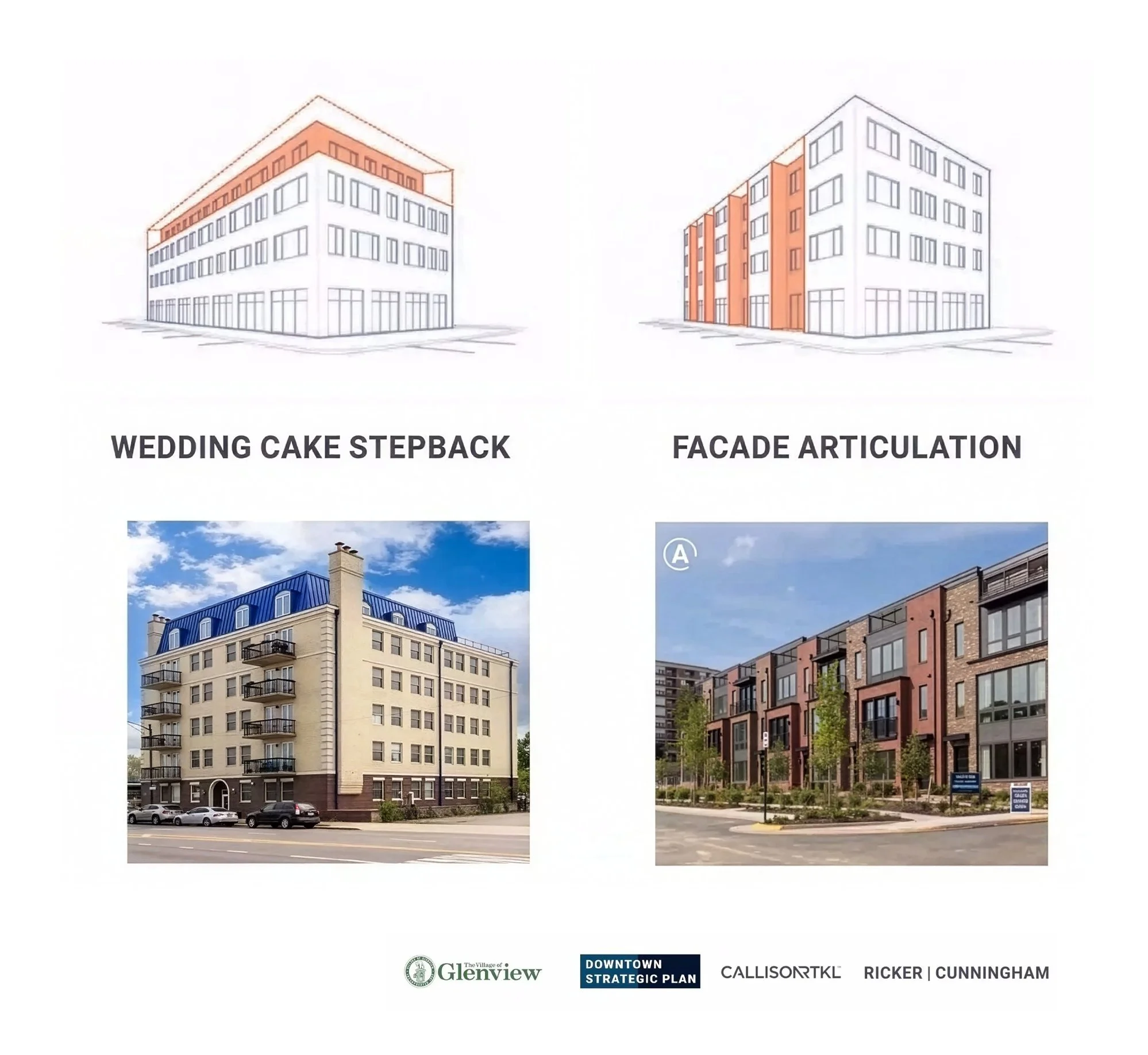
Photo Credit: Presentation, as noted above.
A Timely Program
Can communities accommodate growth while preserving the qualities that make people want to live, work, and invest there? This has been a big question around my hometown — and was at the heart of the recent Municipal Design Review Network (MDRN) webinar, co-hosted with the American Planning Association/Chicago Metro Section (CMS).
The timely topic attracted over 100 participants from across the planning, development, and design professions. The lively program demonstrated that density remains one of the most challenging and important issues facing communities today.
Suburban Perspective
The Director of Community and Economic Development for the City of Des Plaines, Jeff Rogers, provided a comprehensive suburban perspective. He drew on examples from communities throughout the Chicago region and emphasized that residents often react not to density itself, but to concerns about building height, bulk, traffic, shadows, and neighborhood character. His practical observations captured the daily challenges facing planners and elected officials as they work to balance community expectations with evolving housing and development needs.
Urban Perspective
Katharyn Hurd, City Planner for the City of Chicago, expanded the discussion by focusing on how to cultivate residential development in walkable, transit-oriented neighborhoods. Her presentation illustrated the realities of modern planning: public outreach strategies, building community support, and working with zoning tools to connect future growth with existing transit infrastructure.
Human Dimensions
One of the most valuable lessons from the program was the recognition that public opposition often stems from uncertainty rather than simply hostility to change. Residents frequently encounter proposals through legal notices or informal conversations long before they understand the details. Rogers noted that technical terms such as “density” or “mixed-use development” can immediately trigger concern. Successful planning therefore requires not only technical expertise but also clear communication and opportunities for meaningful dialogue before positions become entrenched.
How Design Matters
A particularly useful takeaway was the distinction between density and building bulk. Throughout the presentation, examples from Glenview, Skokie, Downers Grove, and Des Plaines demonstrated how setbacks, step-backs, and façade articulation make a difference. Streetscape improvements, wider sidewalks, and tree canopies can dramatically influence how development is experienced from the street. Good design can soften impacts, improve walkability, and help new development fit comfortably within an existing community.
Lessons for Community Leaders
Another recurring theme was the importance of thinking beyond individual projects. Hurd described how Chicago’s strategies build upon years of previous studies and public investments. Rogers stressed the value of early conversations with developers, residents, and elected officials. Both presentations underscored the importance of identifying appropriate locations for growth and focusing on long-term community outcomes rather than short-term reactions.
Building Better Places
Particular thanks to moderator Andy Cross of The Lakota Group, whose thoughtful questions and facilitation helped connect the urban and suburban perspectives while prompting lively discussion.
Taken together, the presentations reinforced a principle long embraced by MDRN—that growth is most successful when paired with thoughtful design. The challenge is not whether change will occur, but how well we shape it. How is your community balancing growth and quality of place?
In appreciation, John