
Framing the Built Environment
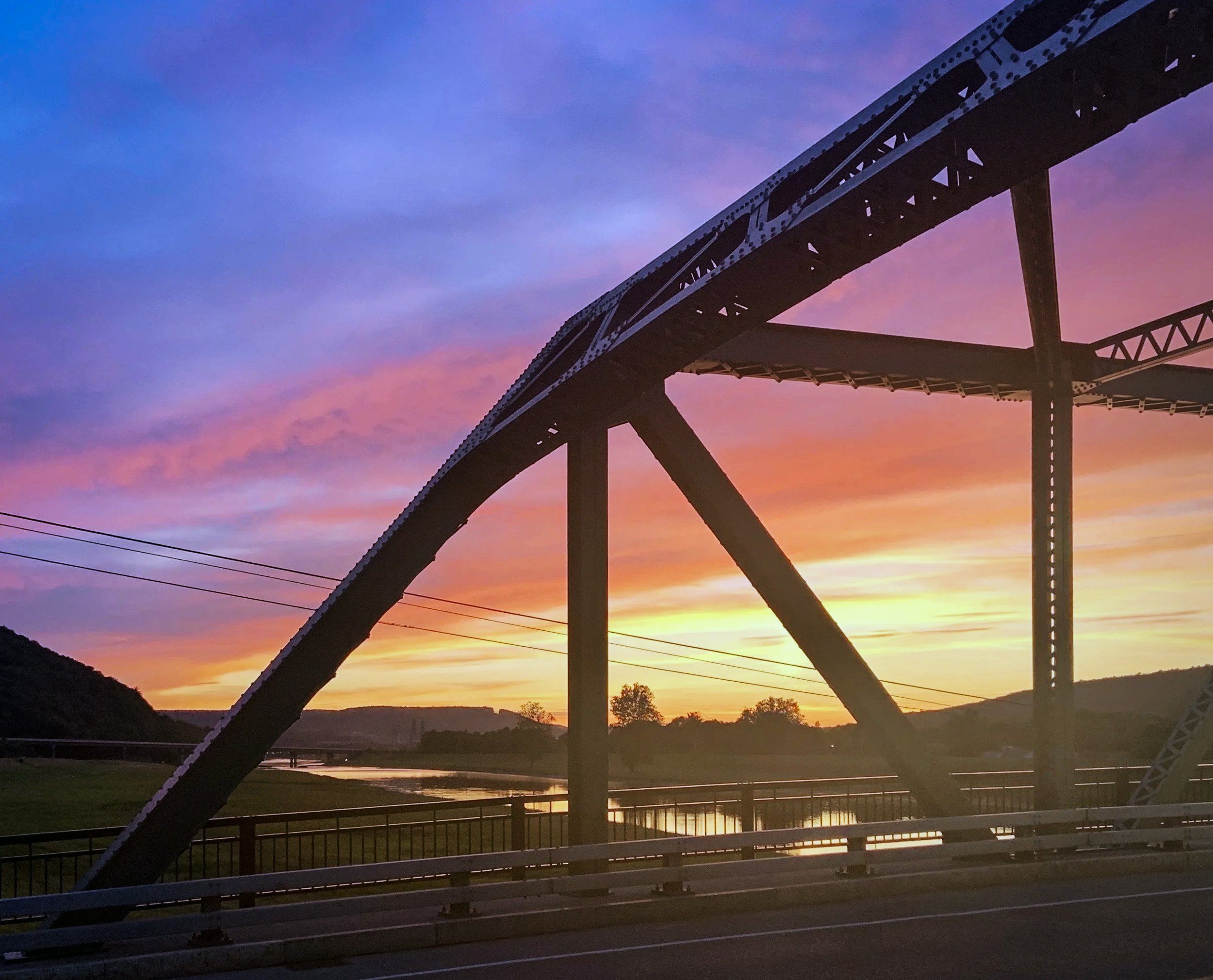
Photo © JRH - Corning, New York
Framing the Picture
I took this photograph almost instinctively at the end of a long day’s drive, in picturesque Corning, New York. It was an unexpected stop, with timing just right at twilight. I noticed the sky and layers of color reflected in the river below. It was a familiar sunset experience, but what struck me was standing within the structure.
Viewing Without Distraction
As I see now, the functional steel truss shaped the experience and the image. Its lines and angles didn’t compete with the landscape as much as frame it. Without such contrast the scene might have been pleasant, but less memorable. This reminds me how technology affects our reaction to scenery.
Long Standing Tension
This has long been part of my work with Scenic America: that infrastructure and landscape often clash but don’t have to compete. Roads, bridges, towers and public spaces can either be unsettling or enhancing our experience of place. At their best, they become inspiring improvements rather than disruption of natural beauty.
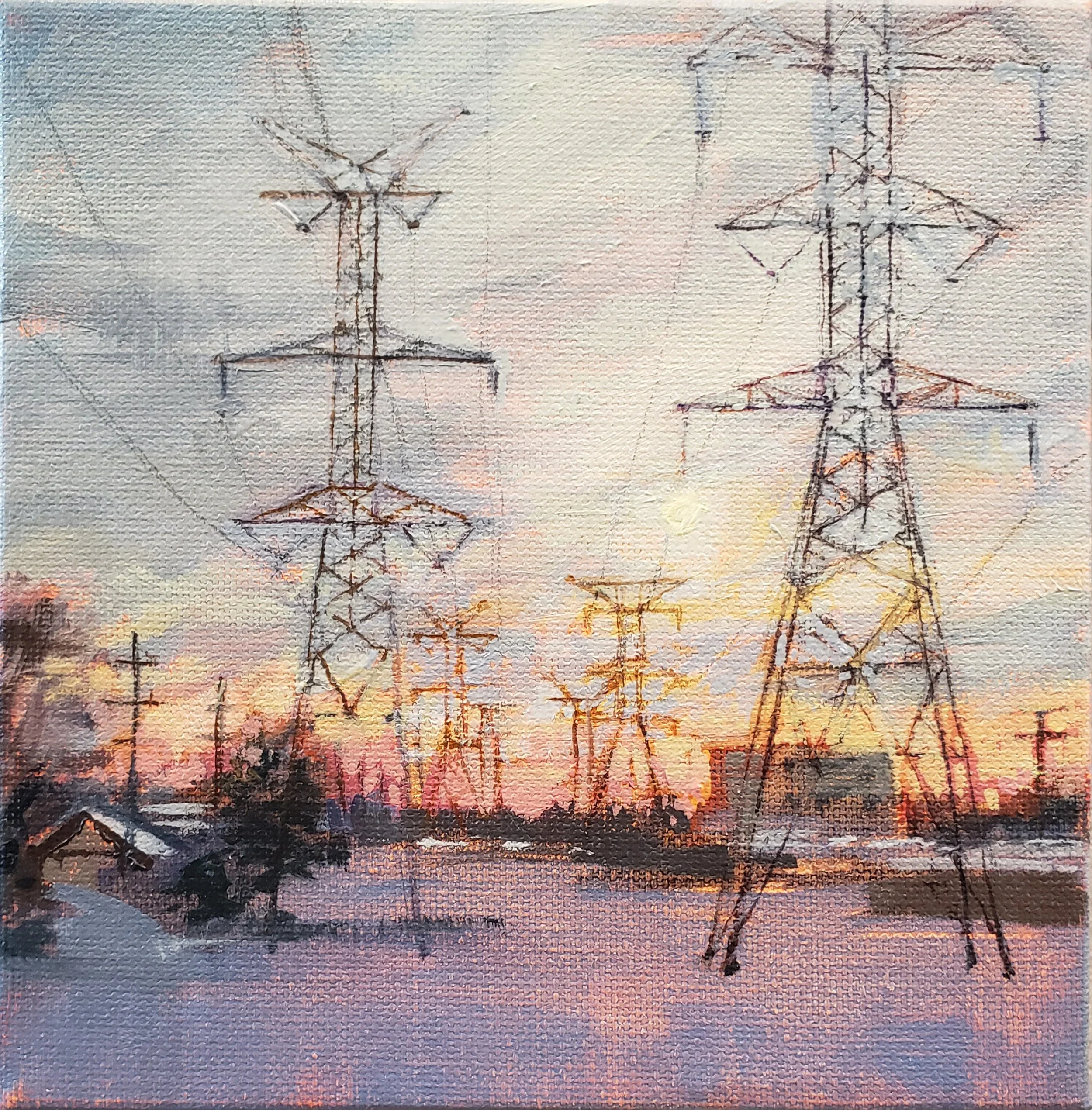
6”x 6” landscape painting
Deb Anderson
Viewing What Resisted
This image recently struck me in a very different way. A small 6”x 6” landscape painting by a talented local artist, Deb Anderson, was included in a local exhibit of miniature detailed canvases. Utility towers which I would usually see as intrusive blight became a captivating element of this sunset setting. The scale, lighting and composition shifted the experience completely for me.
Scale Changing Perceptions
In this miniature setting but broad view, the towers lose their dominance and show a kind of rhythm. The lines are delicate, set against the awesome sky. Instead of reacting with my usual rage about “visual pollution” I found myself really looking and thinking how they fit in the scene.
Accepting Complexity
This was a surprising and revealing change for me. I often resist what interrupts a landscape, whether it’s billboards, signage clutter, or the newest wind or solar technology. But as I become more open to seeing - if it takes a miniature painting or model - I hope to better appreciate inevitable change.
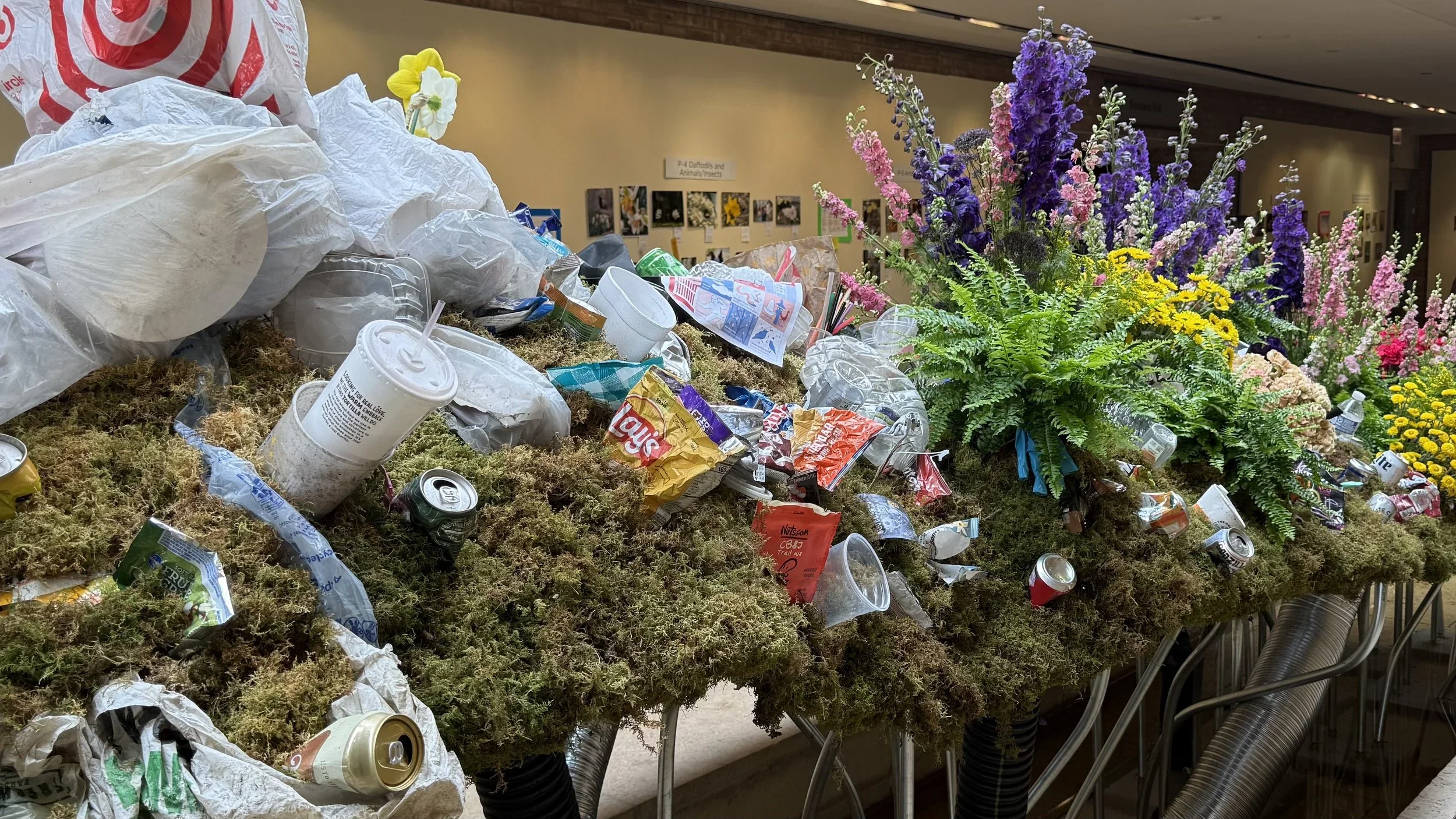
Botanic Garden Exhibit
highlighting thoughtless litter contamination
Bridge Too Far
Then just as I was getting philosophical here, and wondering if I was losing my edge or intensity as a community advocate, I saw this exhibit at the Botanic Garden. It was unexpectedly powerful in showing roadside plantings contaminated by thoughtless litter contamination. So I’m reminded that appreciation still involves judgment. And every step of change prompts discernment.
In appreciation, John
