Museum Moments and Meaningful Places
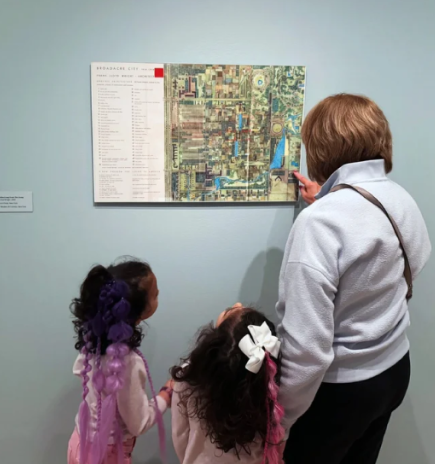
Photo © JRH - Metropolitan Museum of Art, NYC
Museum Surprises
During a family visit to New York, we made a spontaneous visit to MoMA. What I expected to be a pleasant family diversion became something much more memorable.

The moment that struck me was standing together in front of Frank Lloyd Wright’s Broadacre City. I have long enjoyed Wright’s buildings in and around Chicago and have had the good fortune to visit Taliesin in Wisconsin and Taliesin West in Arizona. But I had paid much less attention to his larger town-planning ideas. Seeing this architectural model - and being reminded of model railroad layouts I have enjoyed over the years - gave it added impact. It prompted me to reflect on some lifelong town-planning interests.
Competing Visions
What struck me was not just Wright’s model itself, but the broader exhibit around it. Wright imagined an expansive and decentralized American landscape. Around that time the famous French architect Le Corbusier proposed a more vertical and ordered city, with towers set among open green spaces. Their visions were nearly opposite in form, but both have influenced the places we know today, for better and for worse.
Standing there, I was reminded that both were raising a deeper question: what kind of environment actually helps people live well together?
Neighborhood Life
That question followed me back outside the museum. In the Upper East Side neighborhood where my granddaughters live and attend school, I was struck by how many other children they knew and greeted along the street - in one of the densest urban settings in the world. Those small recognitions energized them and helped make the neighborhood feel personal.
This reminded me that the real measure of a place is not whether it is urban or suburban, large or small, but whether it encourages human connection and delight in everyday life. And also thinking what individual elements can contribute to that.
Back Home Again
Back home in Glenview and Evanston, I find versions of those same pleasures. In Glenview, with many active local organizations and multigenerational families, I enjoy how often I see familiar faces and small signs of community life. In Evanston, I continue to be drawn to the lakefront setting, and I recently discovered a charming French café near the beach. Again, I am struck how much setting shapes daily inspiration.
Perhaps the real lesson is not which planning theory prevails, but how different kinds of places can still inspire community and beauty. That renews my hope to keep using this writing and civic involvement in support of places that bring people together.
