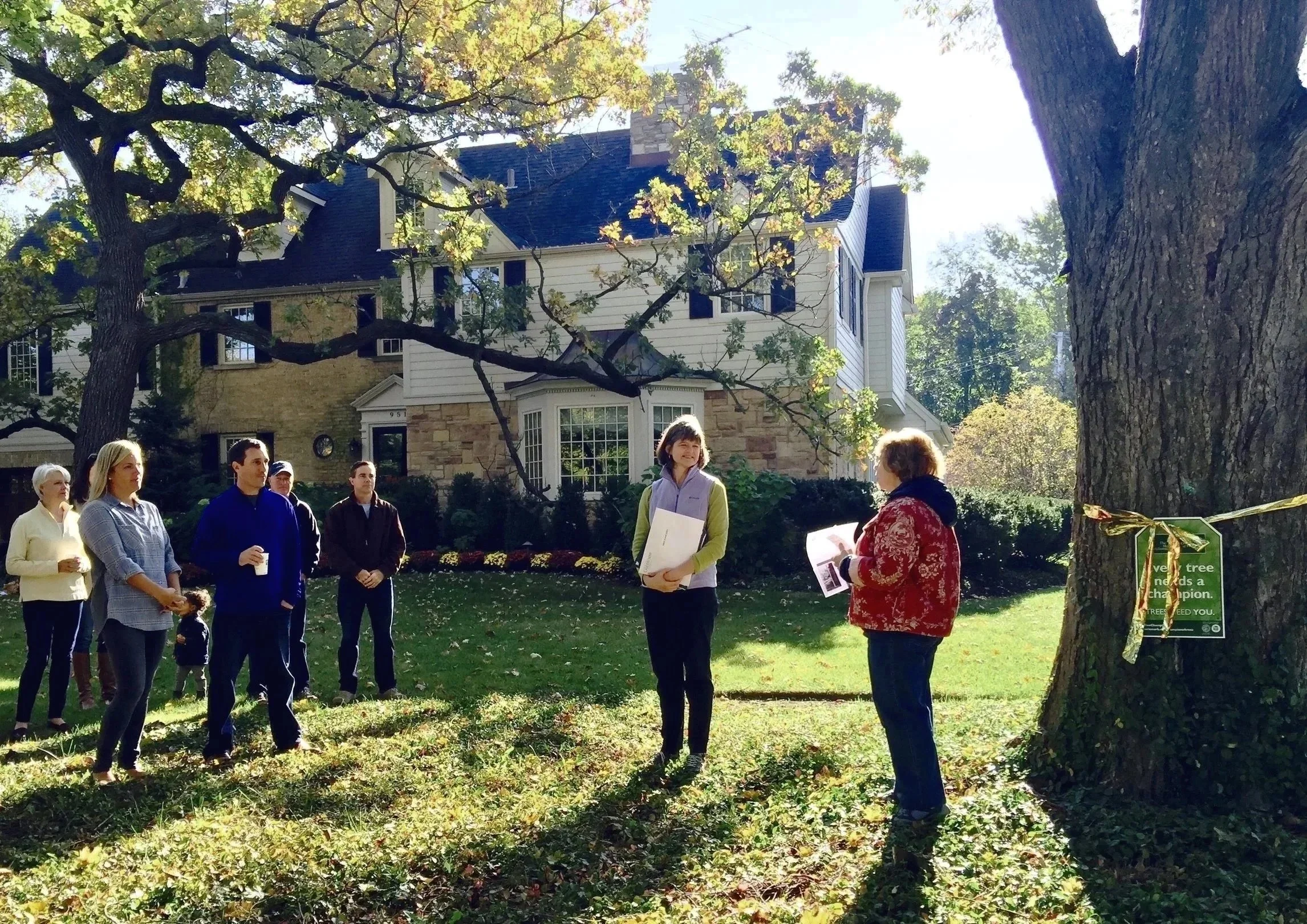
Photo © JRH - Heritage Tree Event
Autumn Leaves
Autumn has always been a special time for me, with splashes of beauty and touches of melancholy. By November, many of the leaves are on the ground, but it’s also easier to see the shape of trees along our streets. Fall is a great time to take a walk and notice how much they contribute to the way a neighborhood looks and feels.
“Oaktoberfest”
That got me thinking about how our neighborhood had once put an Oktoberfest twist on noticing its trees. We called it “Oaktoberfest.” Selected homeowners received certificates, children took part in the activities, and ribbons marked the trees we had singled out. We also put those trees on a map so neighbors could find them in the future and see how they fit into the history of our streets and The Circles.
Personal Involvement
Over the years, I’ve worked on tree conservation projects and advocated for the many ways trees benefit a community, from health to economics. This project demonstrated how those ideas could take root closer to home. And one of the greatest pleasures of starting Oaktoberfest was working closely with two local friends and inspirational environmental leaders, the late Judy Beck and “Hank” Saunders, both featured above. Preservation and conservation is not always about grand gestures. Sometimes it’s just helping people identify what is already valuable around them and engaging people in the process.
Practical Partnerships
The Circles neighborhood worked with Glenview’s Natural Resources Commission for this project to revive the Village’s Heritage Tree effort at the neighborhood level. Residents and Village staff shared information that could help update the Public Works tree survey. We considered how visible a tree was, how it shaped the street, and what its health and maintenance needs might mean for its future. These can be tougher but important choices when heritage trees are aging or prone to disease.
Part of Local History
The criteria used weren’t just botanical. We looked at how mature trees framed older homes and gave landscaped parkways their character. That made the tree map a companion to the neighborhood’s architectural history. My Circles Book. And the celebration gave people a reason to walk those streets together and draw attention to the Village’s broader tree recognition and replacement efforts.
What To Do
A neighborhood can start with a walk, a friend, a few photos, and a simple map. Ask which trees people would miss or what they know about them? Then compare notes with the town’s staff about their condition and care. A tree you’ve walked past for years can look very unique once a neighbor tells you its story!
